Wednesday, 22 May 2013

Review: The Place Beyond the Pines

A review for Waxxx Magazine


Derek Cianfrance wastes no time in capturing Ryan Gosling’s mythic abs as he opens his latest film, ambitious and mythic in tone, with the image of a pacing stunt driver confined to his small trailer, the billowing sounds outside those belonging to a funfair. Cianfrance’s camera doesn’t cut. Instead, we see Gosling stab his flick-knife into a wall, pick up his red jacket, slip on a Metallica vest and make his away across the carnival landscape. We follow from behind, the announcer calls the name of Handsome Luke and Gosling mounts his motorbike, the camera still doesn’t cut. Immediately there is a sense of importance, and The Place Beyond the Pines is definitely treated, and consequently feels spectacular and reverent as Cianfrance proceeds to tell a story of fatherhood amidst a cops and robbers narrative spanning over 15 years.

Despite receiving great critical acclaim at Sundance, Cianfrance’s first feature, Brother Tied, failed to pick up distribution. His second, and first outing with friend and subsequent colleague Ryan Gosling, had no trouble picking up distribution when Harvey Weinstein displayed interest. Blue Valentine went on to deliver awards for Michelle Williams in the Best Actress category whilst Cianfrance himself admits that it was the success of this film that allowed him to go on to make The Place Beyond the Pines, a film less about the faltering relationships of a modern day couple and more about the faltering relationships of modern day families. The story unfolds as a triptych. Gosling’s taciturn stunt driver, reminiscent of his role in Drive, is confronted upon his return to Schenectady, an upstate New York town with a name that translates from Mohawk to ‘the place beyond the pines’, by Romina (Eva Mendes) and the news that he has fathered an infant son. He wants to provide for his son, but as a friendly fugitive mechanic played by Ben Mendelsohn tells him, the only way to do so is by using his particular skill set. Unlike Liam Neeson and the deployment of his skill set in Taken, however, Luke is clearly affected by his foray into bank robbing, and the result is realism.

Consequently, Luke crosses paths with a fresh-faced Bradley Cooper, just out of law school and eager to make an impact on the New York police force which holds as much integrity as the one Al Pacino faces in Serpico. It comes as no surprise that Ray Liotta’s character, the frosty and domineering Deluca, is central to such corruption. Cooper and Gosling provide a strong basis for the film and yet, surprisingly, the film doesn’t falter in its third act which, after some tenuous expositional scenes, provides a satisfying, cathartic conclusion. Impressive parallel shots serve to enforce the link between the three stories and a score from Faith No More’s Mike Patton heightens the film’s grandeur. Cianfrance’s third feature film is certainly more ambitious than the character drama of Blue Valentine and is all the richer for it. With a running time of 140 minutes it doesn’t outstay its welcome and, instead, leaves you thirsting for whatever Cianfrance does next. With Gosling claiming to be taking a break from acting, he may well have found his new leading man in Bradley Cooper, an actor who has shown truly unexpected promise and talent since The Hangover.

Thursday, 15 November 2012

Review: End of Watch

Film review for the Whistleblower


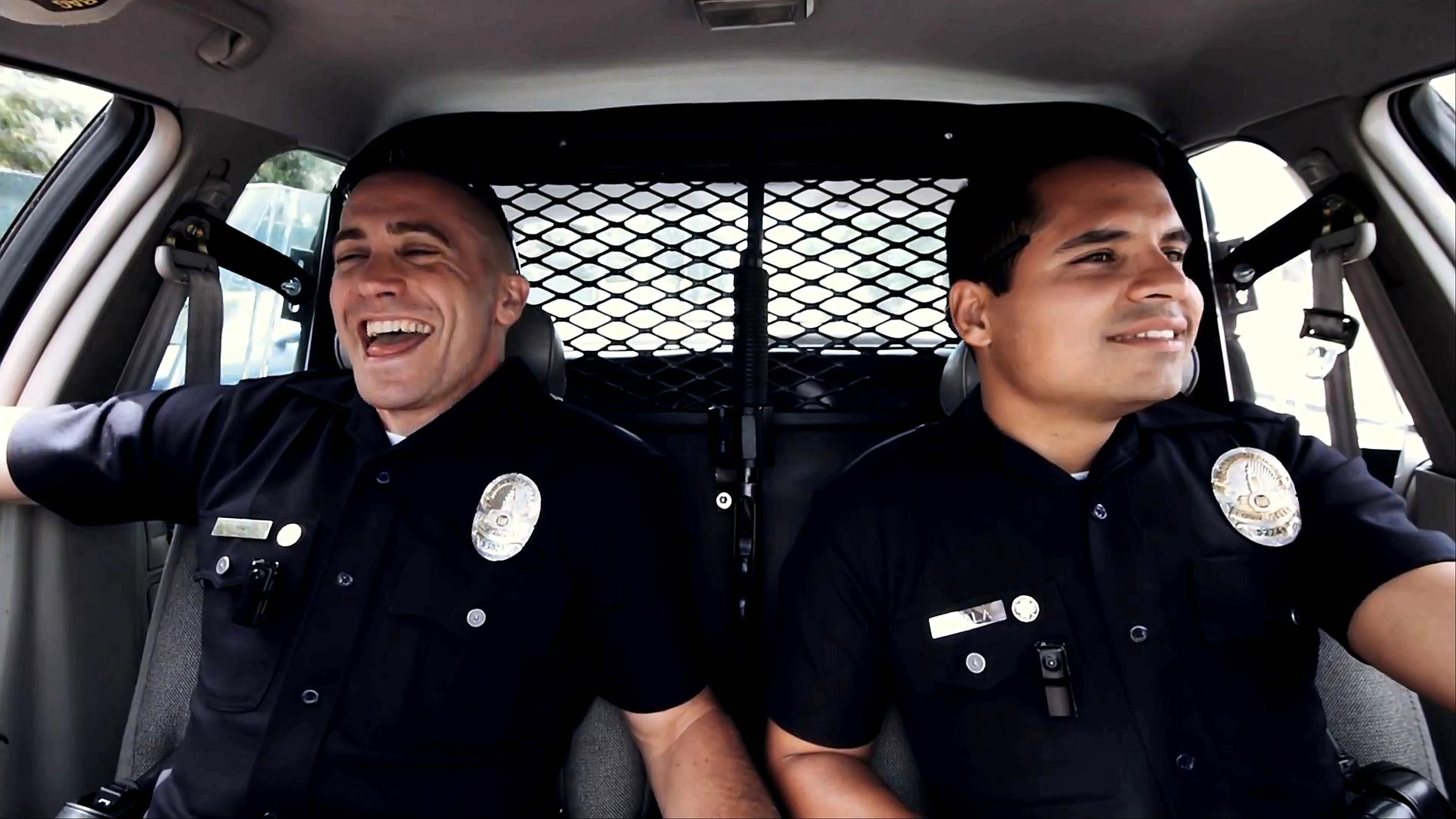
End of Watch is a cop-drama film with a thrilling difference. Through the use of public surveillance and handheld HD cameras, as well as those attached to the police cruiser, the viewer is thrust into the South Central LA landscapes where there is a real sense that danger is always looming. Written and directed by veteran of the genre David Ayer (Training Day, The Fast and the Furious), it seems that we’re getting something slightly original with this latest offering which really raises the bar for action films such as this.

The streets of LA take officers Taylor (Jake Gyllenhaal) and Zavala (Michael Peña) on a flash around the city with great pace. Routine traffic stops and runnings with local gang members give us a sense that these are two LAPD officers that can be trusted and liked by those on both sides of the law; holding the law of the street closer to their chest than that of the book. It’s a vision of the LAPD we have seen before from Ayers, a community driven police force which shares the values of the streets it patrols. The tone of the film changes, however, when Taylor and Zavala run up on a car full of drug money, jewel-encrusted weapons and gangsters, which consequently lead them into the world of the Mexican cartel. It is here that the film takes on an element of peril which up until now didn’t exist. Our confident and assured cops are now involved in shoot-outs with a group that operate above the law and, in true heroic fashion, they’re on their own.

Whilst this whistle stop tour of LA takes us to scenes which touch on implausible, a scene in which Zavala puts his gun down to fight with a gang member in order to earn the police respect comes to mind, it does so with such incredible urgency that there’s no time to linger on such trivialities. If the overly dramatic story and themes of friendship and brotherly love get all a bit too much, then you can count on this visceral style of filmmaking to hold your attention as the action unfolds – and with what pace it unfolds!  

Wednesday, 14 November 2012

Fire and Light: Tracing the cinematic desire


An article for Flash: Lancaster University Critical and Creative Journal

Man has long looked towards light, towards the glowing sun which is the giver of life, for many things – not least for artistic fulfilment. The primordial desire for the moving image which enchants so many of us in theatre houses around the world today is one which can be traced back through our history. Our cave-dwelling ancestors sought entertainment in a distinct form of proto-cinema that involved creating wonderful paintings on their cave walls which, by the light of a flickering fire within the cave, are animated into life. In his awe-inspiring 3D documentary Cave of Forgotten Dreams, illustrious director Werner Herzog traces “the beginnings of the modern human soul” [1] to the Chauvet cave in the south of France where sophisticated drawings of mammoths, horses and lions hunting caught the imagination of early man.

In these caves there is an uncanny sense of shared consciousness with beings that once seemed so distant to us, twenty thousand years distant to be exact. Light was shown to give life in these caves, providing impressions of reality which aimed to satisfy our cinematic desire. Whilst these cave paintings can hardly be called cinema, they do show a fascination with the moving image that caught human curiosity and was never let go.

Technological restrictions meant that proto-cinema remained just that. The cinematic desire, however, can continue to be traced in our history. The projection of an object reality, that is the outside world, has been focused on by great thinkers such as Aristotle in Ancient Greece and Mozi in Ancient China who both made references to the camera obscura in their writings. This rudimentary ‘camera’ was placed inside a darkened room (where the properties of light can be most practically honed) with a hole in one side which light passed through, creating an inverted image of the object world before the onlooker. As time and technology progressed, an array of inventions was created with the aim of satisfying our cinematic desire; including the zoetrope and daguerreotype to name just two.

 Keith Cohen in Film and Fiction: the Dynamics of Exchange asserts that cinematic desire could only truly be realised “when the two essentials of motion pictures where at hand: the pictures (i.e. the photographic principle) and the motion (i.e. the means of mechanically synthesizing the discrete part of any action).”[2] The gradual perfection of the photographic medium in the nineteenth century gave birth to a cinema which projected movement, albeit within a fixed spatial frame at first, of workers leaving a factory[3], or a train pulling into a station.[4] This documentary style of filmmaking became synonymous with the Lumière brothers (a suitable name deriving from the French word for ‘light’) and led to a wealth of important works rooted in reality, such as Herzog’s film cited here. It was magician Georges Méliès, however, that first understood the creative capacity of cinema. By use of camera tricks and elaborate sets Méliès created a cinema in which time and space were at the hands of the filmmaker. With this came the birth of modern cinema and an unprecedented acceleration in the technology of the medium (sound, colour, widescreen, 3D…) and the symbolic language of film which engrosses us all.


[1] Werner Herzog, The Cave of Forgotten Dreams (Creative Differences, 2011).
[2] Keith Cohen, Film and Fiction: the Dynamics of Exchange (Yale University Press, 1979).
[3] Lumière, La sortie des usines Lumière (1895).
[4] Lumière, L'arrivée d'un train en gare de La Ciotat (1896).

Monday, 12 November 2012

Preview: The Master

Film preview for The Whistleblower.


The Master sees Paul Thomas Anderson return with his latest film since 2007’s hugely successful There Will Be Blood, a film which cemented Anderson for many as the filmmaker of his generation. With praise already rushing in from early press and festival screenings, this auteur looks to be on course for even more Academy Award nominations with his story of cults, transition and unsettlement in post-war America.  

Anderson’s sixth feature film follows Freddie Quell (Joaquin Phoenix), a Navy officer sent home from combat in the Second World War on the grounds of psychological instability. Struggling with settling back into a life chasing the great American dream and developing a serious addiction to his home-made hooch, Quell becomes a drifter looking for something certain in the mysterious modernity of America. All is looking lost for Quell until he finds himself, in a drunken stupor, on the steamboat of Lancaster Dodd (Philip Seymour Hoffman), a self-titled ‘writer, doctor, nuclear physicist, theoretical philosopher [and]… above all, a man’. In this meeting of chance, Freddie finds cause and purpose, and Dodd finds a volunteer to exercise his psychological theories. Although Anderson denies the film is directly about Scientology, there is a clear connection between Dodd, the leader of a philosophical movement known as ‘The Cause’, and Scientology’s founder L. Ron Hubbard.  

With Radiohead’s Jonny Greenwood providing an original score and cinematography being handled by Mihai Malaimare Jr., who has worked with the likes of Francis Ford Coppola, The Master is going to be an unmissable film. Especially for anyone who wants an alternative to Hollywood’s latest offerings from a filmmaker who has a complete understanding of his trade.


Wednesday, 12 September 2012

Blocked: why do festivals fail?

An article published by Waxxx Magazine


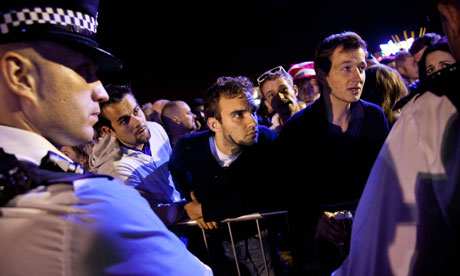
If the sheer amount of festivals which have sprung up in various fields and cities around the UK tells us anything, it’s that there is something about music festivals that we just can’t get enough of. Another thing that us British can’t get enough of, if stereotypes are anything to go by, is queing – a phenomenon which we have become known for taking quite seriously. The two combined, however, led to disaster on Friday 6 July as Bloc Weekend was shut down, before leading the organizers to declare administration, due to overcrowding that brought London Pleausre Gardens to a stand still. The event was cancelled on its opening evening by the organizers at the festival’s first time in London who, in a statement released hours later, insisted that ‘safety of those attending is our primary concern at all times.’

Looking back at Bloc, a festival which provided an eclectic line-up of artists across the field of electronic music including Flying Lotus, Four Tet, and an appearance from Snoop Dogg, it is difficult to see where things went wrong. Those attending the event on Friday evening blamed incomplete, or not yet started, construction as the cause of Bloc’s problems which would only have added to claims made by the Metrpolitan Police that the rain created heavy congestion in certain areas of the site. One thing seems certain, however, it was not the problem which some festivals have had in the last few years of simply not receiving enough ticket sales. In fact, weekend Bloc tickets had sold out prior to the event whereas some festivals this year, such as Knebworth’s Sonisphere, failed to attract the attention which they had done in the past.

What’s more, Sonisphere isn’t alone as newly emerging festivals vow to offer a unique experience which can rival the more traditional music festivals. With rising ticket prices and rocketing costs for food and drink at many events, it really isn’t any surprise that the music festivals which offer, well just that, are suffering. It’s a decline that has been noted by Glastonbury’s Michael Evis who feared the demise of his festival in the next ‘three or four years’, asserting his belief that ‘people have seen it all with festivals. They want something else.’[1] In a time when people have to choose more carefully what it is they want from their festival experience, it is the likes of Bestival and Lattitude, festivals which offer a thorough bill of entertainment on their roster as well as a wide range of music, which are seeing a rise in their ticket sales year after year.

The competition from abroad is also a factor in the decline of homegrown festivals as the likes of Croatia’s Hideout or Outlook, or Spain’s Innovation in the Sun don’t have to contend with the great British weather; the severity of which brought an untimely end to this year’s Creamfields in Cheshire. Music festivals have become summer holidays to many and the appeal of music in the sun, in a different country, has appealed to many who dream of hanging up their wellies and escaping the mud. That said, Bloc did sell a substantial amount of tickets as a result of offering an unflinching bill of music. What failed this festival was poor organisation and planning as they ventured from their usual venue, Pontin’s holiday park, to London Pleasure Gardens. The poigniant point to take from this, perhaps, is that in a climate where many smaller festivals are struggling to keep up, it is important for those which do receive interest to get it right.

After all, interest in the British music festival certainly isn’t a lost cause. With such a large amount on offer ticket drops are to be expected as competition rises and, more importantly, variety in our music festivals increases. Such variety is something the British festival scene can be proud of as events that offer an array of talent stand up well alongside more specialized festivals such as Creamfields or Download, ensuring that, with careful planning, any festival-goer can have a unique experience in the UK. Even after tickets sold out for this year’s Bestival, which coincidentally was lucky enough to be drenched in sunshine, Rob da Bank made the decision to stream live sets of artists such as The xx, New Order and Stevie Wonder on Youtube, making Bestival the first British festival to provide a service which the likes of Tomorrowland and Coachella have been doing for some time, exposing our love of music to the world. The popularity of the music festival may be under threat, but with the likes of Glastonury, Reading and Leeds, and a wealth of festivals which have gained an international reputation for their successes, the British festival is far from dead.

Thursday, 16 August 2012

Review: The Bourne Legacy


The Bourne Legacy (dir. Tony Gilroy)

When Tony Gilroy, the man responsible for penning the three previous Bourne films, was faced with Matt Damon’s decision to not reprise his role as rogue agent Jason Bourne he was left with two choices. One was to carry on as the James Bond franchise has done so prudently, simply recast the role of Bourne and continue the story from where Ultimatum left off or, as Bourne Legacy is the first of the films not finding its origins in a Robert Ludlum thriller, expand the depth of the story to the point in which Bourne and ‘Treadstone’ are the tip of the iceberg.

It was the latter which Gilroy, rightfully, opted for casting Jeremy Renner (The Hurt Locker, Avenger’s Assemble) as agent Aaron Cross who, as a result of Bourne’s antics in Ultimatum which occur as this film goes on, is forced to go rogue as his programme is closed down by an emotionally detached Ed Norton. There are often scenes is this film which show men in suits, in boardrooms conducting the murder of people from around the world, a scenario which serves to unsettle the audience’s trust towards any authoritative figures who are pulling on a wealth of resources to track Cross down. Cross’s only help comes in the form of scientist Marta Shearing (Rachel Weisz) who is also forced to flee for her life for her part in the ‘Outlook’ programme: creating the drugs which give those on the programme a Nietzschean superiority.

Whilst this film certainly does lack the intellectual edge which the three previous flourished, Gilroy has created a film which continues the Bourne franchise in a way which works fine. For some, he may be going slightly too far as he adds another programme which eradicates the inconsistencies of ‘Treadstone’ and the emotions of ‘Outlook’ later in the film suggesting even more possibilities for another post-Bourne sequel.

Where the film has true strength is in the expert handling of Renner’s action sequences and the suggestions it makes that there are people in the real world who have to make decisions that, as Norton reassures Cross, are ‘morally indefensible and absolutely necessary.’ It is perhaps the same sentiment that will enter the viewer’s head as Moby’s ‘Extreme Ways’ welcomes the closing titles of the 23rd Bourne, one shudders to think.

Thursday, 9 August 2012

Film previews for The Whistleblower


Looper (dir. Rian Johnson)

For anyone who saw Rian Johnson’s debut feature film Brick, a neo-noir thriller that drew heavily from the hard-boiled fiction of Dashiell Hammett and Raymond Chandler, Looper is bound to cause excitement. Casting Joseph Gordon-Levitt once more as his leading man, Johnson’s third film takes place in a futuristic gangland where time travel has been invented – but made illegal.

As a result, time travel is available only on the black market which the mob then use when they want to get rid of someone by sending them back 30 years into the past where a hired gun, or ‘looper’, like Joe is waiting. It seems like the perfect crime until one day the mob decide to close the loop, sending Joe’s future self (Bruce Willis) back to the past to be assassinated, forcing Joe on the run as he chases down his future self.

Johnson has written as well as directed this film which has the appearance of a well-crafted science fiction film that draws on the characters and language of pulp fiction and film noir. Emily Blunt and Jeff Daniels are set to support the two leading men in what looks to be one of the most original and anticipated films of the year.

Looper opens in the UK on 28 September.


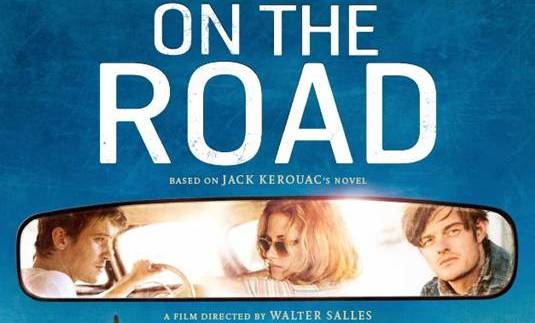
On the Road (dir. Walter Salles)

An adaptation of Jack Kerouac’s celebrated novel On the Road has been in the pipelines now for over three decades since Francis Ford Coppola, who executive produces, first displayed interest in 1979. Since then the project has undergone several changes in directors and screenwriters before finally settling on Walter Salles and Jose Rivéra, the team that brought us the road-trip memoir of Che Guevara in The Motorcycle Diaries.

Kerouac’s semi-autobiographical book is one which depicts the time he spent around the likes of Allen Ginsberg, William Burroughs and, primarily, Neal Cassady, who provides the inspiration behind the Dean Moriarty character (Garrett Hedlund). The film follows aspiring writer Sal Paradise (Sam Riley) and charming ex-con Dean Moriarty as they hit the road in a search for unquenchable freedom. Their journey takes them on an adventure which captures the zeitgeist of the 1950s beat generation to which Kerouac belonged and deals with themes of abandoned women and absent fathers which are crucial to the book.

Kristen Stewart, Viggo Mortensen, Kirsten Dunst and Steve Buscemi add to the cast providing the array of love interests and free spirited characters which Sal and Dean encounter on their way through the cityscapes of San Francisco, New York and New Orleans. The film promises an energetic jazz soundtrack consisting of Ella Fitzgerald and Slim Gaillard alongside an original score from Academy Award-winning composer Gustavo Santaolalla (Brokeback Mountain).

                               On the Road opens in the UK on 12 October.


   Skyfall (dir. Sam Mendes)

Although details of the forthcoming James Bond movie Skyfall have been kept pretty much under wraps, one thing we know for sure is that it will see Daniel Craig return as Her Majesty’s secret servant - although there have been no reports of any scene involving Craig and Queen Elizabeth II parachuting out of a helicopter into any Olympic stadiums!

First-time Bond director Sam Mendes (American Beauty) is at the helm of the project promising to continue the theme of a psychologically damaged 007 for the film which coincides with the 50th anniversary of the prestigious franchise, born out of Ian Fleming’s novels. That said, at the Skyfall press conference Mendes, who has worked with Craig before on the film Road to Perdition, was quick to dismiss any notion that the film would shy away from action sequences in order to concentrate on Bond’s psyche, insisting there will be ‘a lot of action and much more.’ Mendes being an accomplished stage-director as well as film, you can be assured that he will be able to deal with both elements to of the film with dexterity.

Judi Dench will reprise her role as M for an impressive seventh time alongside a celebrated cast including Javier Bardem (No Country for Old Me) as the film’s villain, and Ralph Fiennes (Harry Potter, Coriolanus) whose character, like much of the film, is shrouded in mystery. Locations for the film include London, Shanghai, Istanbul and Scotland so you can be sure that Skyfall will contain the spectacle which we have all come to know and love over the past 50 years and 23 films.

Skyfall opens in the UK on 26 October.