Thursday, 16 August 2012

Review: The Bourne Legacy


The Bourne Legacy (dir. Tony Gilroy)

When Tony Gilroy, the man responsible for penning the three previous Bourne films, was faced with Matt Damon’s decision to not reprise his role as rogue agent Jason Bourne he was left with two choices. One was to carry on as the James Bond franchise has done so prudently, simply recast the role of Bourne and continue the story from where Ultimatum left off or, as Bourne Legacy is the first of the films not finding its origins in a Robert Ludlum thriller, expand the depth of the story to the point in which Bourne and ‘Treadstone’ are the tip of the iceberg.

It was the latter which Gilroy, rightfully, opted for casting Jeremy Renner (The Hurt Locker, Avenger’s Assemble) as agent Aaron Cross who, as a result of Bourne’s antics in Ultimatum which occur as this film goes on, is forced to go rogue as his programme is closed down by an emotionally detached Ed Norton. There are often scenes is this film which show men in suits, in boardrooms conducting the murder of people from around the world, a scenario which serves to unsettle the audience’s trust towards any authoritative figures who are pulling on a wealth of resources to track Cross down. Cross’s only help comes in the form of scientist Marta Shearing (Rachel Weisz) who is also forced to flee for her life for her part in the ‘Outlook’ programme: creating the drugs which give those on the programme a Nietzschean superiority.

Whilst this film certainly does lack the intellectual edge which the three previous flourished, Gilroy has created a film which continues the Bourne franchise in a way which works fine. For some, he may be going slightly too far as he adds another programme which eradicates the inconsistencies of ‘Treadstone’ and the emotions of ‘Outlook’ later in the film suggesting even more possibilities for another post-Bourne sequel.

Where the film has true strength is in the expert handling of Renner’s action sequences and the suggestions it makes that there are people in the real world who have to make decisions that, as Norton reassures Cross, are ‘morally indefensible and absolutely necessary.’ It is perhaps the same sentiment that will enter the viewer’s head as Moby’s ‘Extreme Ways’ welcomes the closing titles of the 23rd Bourne, one shudders to think.

Thursday, 9 August 2012

Film previews for The Whistleblower


Looper (dir. Rian Johnson)

For anyone who saw Rian Johnson’s debut feature film Brick, a neo-noir thriller that drew heavily from the hard-boiled fiction of Dashiell Hammett and Raymond Chandler, Looper is bound to cause excitement. Casting Joseph Gordon-Levitt once more as his leading man, Johnson’s third film takes place in a futuristic gangland where time travel has been invented – but made illegal.

As a result, time travel is available only on the black market which the mob then use when they want to get rid of someone by sending them back 30 years into the past where a hired gun, or ‘looper’, like Joe is waiting. It seems like the perfect crime until one day the mob decide to close the loop, sending Joe’s future self (Bruce Willis) back to the past to be assassinated, forcing Joe on the run as he chases down his future self.

Johnson has written as well as directed this film which has the appearance of a well-crafted science fiction film that draws on the characters and language of pulp fiction and film noir. Emily Blunt and Jeff Daniels are set to support the two leading men in what looks to be one of the most original and anticipated films of the year.

Looper opens in the UK on 28 September.


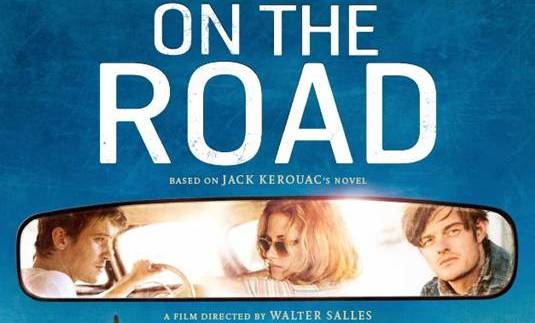
On the Road (dir. Walter Salles)

An adaptation of Jack Kerouac’s celebrated novel On the Road has been in the pipelines now for over three decades since Francis Ford Coppola, who executive produces, first displayed interest in 1979. Since then the project has undergone several changes in directors and screenwriters before finally settling on Walter Salles and Jose Rivéra, the team that brought us the road-trip memoir of Che Guevara in The Motorcycle Diaries.

Kerouac’s semi-autobiographical book is one which depicts the time he spent around the likes of Allen Ginsberg, William Burroughs and, primarily, Neal Cassady, who provides the inspiration behind the Dean Moriarty character (Garrett Hedlund). The film follows aspiring writer Sal Paradise (Sam Riley) and charming ex-con Dean Moriarty as they hit the road in a search for unquenchable freedom. Their journey takes them on an adventure which captures the zeitgeist of the 1950s beat generation to which Kerouac belonged and deals with themes of abandoned women and absent fathers which are crucial to the book.

Kristen Stewart, Viggo Mortensen, Kirsten Dunst and Steve Buscemi add to the cast providing the array of love interests and free spirited characters which Sal and Dean encounter on their way through the cityscapes of San Francisco, New York and New Orleans. The film promises an energetic jazz soundtrack consisting of Ella Fitzgerald and Slim Gaillard alongside an original score from Academy Award-winning composer Gustavo Santaolalla (Brokeback Mountain).

                               On the Road opens in the UK on 12 October.


   Skyfall (dir. Sam Mendes)

Although details of the forthcoming James Bond movie Skyfall have been kept pretty much under wraps, one thing we know for sure is that it will see Daniel Craig return as Her Majesty’s secret servant - although there have been no reports of any scene involving Craig and Queen Elizabeth II parachuting out of a helicopter into any Olympic stadiums!

First-time Bond director Sam Mendes (American Beauty) is at the helm of the project promising to continue the theme of a psychologically damaged 007 for the film which coincides with the 50th anniversary of the prestigious franchise, born out of Ian Fleming’s novels. That said, at the Skyfall press conference Mendes, who has worked with Craig before on the film Road to Perdition, was quick to dismiss any notion that the film would shy away from action sequences in order to concentrate on Bond’s psyche, insisting there will be ‘a lot of action and much more.’ Mendes being an accomplished stage-director as well as film, you can be assured that he will be able to deal with both elements to of the film with dexterity.

Judi Dench will reprise her role as M for an impressive seventh time alongside a celebrated cast including Javier Bardem (No Country for Old Me) as the film’s villain, and Ralph Fiennes (Harry Potter, Coriolanus) whose character, like much of the film, is shrouded in mystery. Locations for the film include London, Shanghai, Istanbul and Scotland so you can be sure that Skyfall will contain the spectacle which we have all come to know and love over the past 50 years and 23 films.

Skyfall opens in the UK on 26 October.


Thursday, 26 July 2012

Music Preview for The Student Guide

The xx - Coexist


After 3 long years, The xx are finally set to return on the 11th of September with their new album Coexist. An early taste of the album was released recently in the form of ‘Angels’, a song which took the internet by storm as Romy Madley Croft’s sensitive voice greets the sound of The xx’s haunting guitar riffs and innovating percussion.

The issue of the difficult second album doesn’t appear to have been a problem for the London-based band if ‘Angels’ is anything to go by. In fact, all signs suggest that Coexist will be an album that remains true to The xx’s signature sound. A nation waits.

Thursday, 19 July 2012

Polarity in the collaborations of William Friedkin and Tracy Letts

An article for Flash: Lancaster University Critical and Creative Journal


‘It’s there, do you see it?’[1]

William Friedkin is a director well known for giving us one of the greatest car chase sequences in film history, The French Connection (1971), and one of the greatest horror pictures in film history, The Exorcist (1973). Nearly 40 years later Friedkin remains to be a powerful force in the industry, finding a partnership with the American playwright Tracy Letts in his film adaptations of Letts’ plays Bug (2006) and Killer Joe (2012). In each film Friedkin and Letts, who also wrote the screenplay for both films, present the audience with characters on the fringe of society: hollow characters who look around them to find a compass of morality. Unfortunately, the backgrounds and surroundings of these characters doom them into seeking love, help and guidance in the wrong places.

The bold tone of each of these films is one which Friedkin and Letts both confess to hold as an interest in their work, the notion that the human condition is split, we each hold a Hyde somewhere amongst our Dr Jekyll. By looking into the aspects of our personalities that are paranoid and cruel, these two artists allow the darker sides of their psyche to manifest in their fiction, a process which Friedkin joked probably kept him from becoming a serial killer.

Although we are presented with the dichotomies of the individual, it is their darkness which consumes the characters of these films. In their first collaboration Bug, we see Agnes White (Ashley Judd) deteriorate as a result of reaching out and clinging to the most powerful thing around her. At the beginning of the film this is drug-use, a habit which started when she lost her young son some years earlier. Agnes, at this point, is a lonely mother whose personality has been fractured and is in need of someone to mend it. In Friedkin’s world, however, there are no people who are universally good and helpful, no knights of old ready to help guide Agnes back to balance. Instead, Agnes is introduced to Peter Evans (Michael Shannon), a recently released soldier who, unknown to Agnes, is mentally ill. Peter’s paranoid personality, manifested in his belief that Agnes’ apartment is riddled with bugs planted there by the US government, becomes infectious as Peter’s conviction in his delusion causes Agnes to allow the paranoid aspects of her personality to rise to the surface.

It is Friedkin and Letts’ projection of a shared world view which allows this to work so well. At first, Peter doesn’t appear mentally ill, nor does he seem a bad influence in Agnes’ life. In fact, when considered alongside Agnes’ abusive ex-boyfriend who has recently got out of jail, Peter’s courteous and lonely character seems a perfect match for a woman who has lost her bearing in the world. As the movie unravels, however, so to do Agnes and Peter’s mental states as paranoia and delusion set in and the sane aspects of Agnes’ personality are repressed under Peter’s influence.

If Bug is a film about sanity hanging in the balance, then Killer Joe is a work which focuses on the morality of characters not too dissimilar to the pair’s first collaboration. The setting of the film is contained mostly in the trailer park home of a family who belong to the fringes of society, not far from the motel room of Bug. Polarity is once again the issue which is played out in the characters as we see good people doing bad things due to the malevolent influence of a powerful agent. In this case, he comes in form of Joe (McConaughey), a detective who also moonlights as a contract killer; polarity personified. After hiring Joe to kill his neglectful mother in order to pay back some drug dealers, Chris Smith (Hirsh) and his family are forced to play by Joe’s rules, whose power over them strengthens to an unbelievable length as the film continues. Letts described Joe as having ‘a strong moral code’ which, ‘as bent as it is’[2], draws the fractured people in society toward him and under his control. Their ability to relate to any goodness in him betrays them as his grip on them allows him to display his cruelty with all the more vivacity towards the end of the film.

For Chris’ family, and for Agnes, it is their inability to fit into society which forces them to seek help in those who, unlike themselves, have conviction. This conviction, for Friedkin and Letts, is not necessarily good and so leads each film towards an intense crescendo similar to that of a Jacobean tragedy. In her 1926 essay ‘The Cinema’, Virginia Woolf described the primitiveness of a cinema which ‘endow[ed] one man with the attributes of the race.’[3] It would seem that these two collaborators want to dismantle such generalisations before our eyes, a process which viscerally shocks the audience. With each film Friedkin accomplishes a sense of claustrophobia which suits the paranoia of Bug and the inescapable cruelty of Killer Joe perfectly. In Letts, this director has found a writer who creates characters existing on the fringes of society, characters who are believable due to their fractured, and therefore human nature.

Hollywood has long been chastised for presenting their audiences with stock characters, the archetypes of good conquering over the archetypes of bad. In the collaborations of Friedkin and Letts, we see this battle of good and bad take place within individual characters set amongst the backdrop of a world which appears gritty and frighteningly real. It is this world which has been dexterously transposed from stage to screen, leaving the audience to transpose such characters into the real world or, indeed, to find such polarity in themselves. 


[1] William Friedkin, Bug (Lions Gate Films, 2006).
[2] Interview with William Friedkin and Tracy Letts at Toronto International Film Festival
[3] Virginia Woolf, ‘The Cinema’ (1926)

Monday, 9 July 2012

The Great Gatsby and Skyfall previews for The Student Guide


The Great Gatsby

Setting the bar high with his brilliant update of Shakespeare’s Romeo and Juliet, Baz Luhrmann returns to the literary canon as he sets about adapting a 3D version of F. Scott Fitzgerald’s celebrated novel for the big screen.

The Great Gatsby sees Leonardo DiCaprio once again cast in the title role as a man who has all the material possessions money can buy, but does not have that which he wants most, Daisy (Mulligan), the woman he loves. Daisy’s cousin, Nick Carraway (Maguire), is drawn into Gatsby’s world of partying and debauchery only to find a man who craves distractions from the misery of his tragedy.

With the trailer bearing a typically modern soundtrack including Jay-Z, Kanye West and Jack White, Luhrmann seems to be offering another example of an anachronistic vision of a true classic which will be released in December.


Skyfall

Reprising his role as Ian Fleming’s 007 for the third time, Daniel Craig will continue to play a psychologically damaged Bond in Sam Mendes’ (American Beauty) first in the series; a debut which coincides with the 50th anniversary of the prestigious James Bond film franchise.

Bond’s primary antagonist comes in the form of Raoul Silva played by Spanish actor Javier Bardem (No Country for Old Men) and will see what Mendes describes as ‘a lot of action and much more’[1] take place amongst the backdrop of Shanghai, Istanbul, London and Scotland.

Judi Dench will take up her role as M for the seventh time alongside the formidable British actor Ralph Fiennes who plays a character who, like the plot of the film, has been kept tightly under wraps. At Skyfall’s press conference, Craig promised he will deliver a Bond which is better than ever. We will have to wait until November to see whether Craig can stand by this promise and discover whether Bond can continue to hold a place in our hearts after 50 years and 23 films.

The release date of The Great Gatsby was pushed back to Summer 2013 by Warner Brothers after the writing of this article.

Friday, 27 April 2012

Latitude Festival 2012: Preview for Waxxx Magazine


Now in its seventh year, Latitude is shaping up to be one of the most culturally relevant festivals the UK has to offer. With headline sets from the incredibly talented Justin Vernon, à la Bon Ivor, Elbow and the Modfather himself Paul Weller, you might ask yourself why it is Latitude brands itself as ‘more than just a music festival’? The answer to this invitingly posed question is provided by the wealth of authors, poets, comedians, filmmakers and artists which can be found amongst the vast array of musical talent.

What’s more, the music which Latitude has on offer is as far from ordinary as the beautiful Suffolk landscape which the festival calls home from the 12th to 15th of July. Rufus Wainwright and Laura Marling bring their acclaimed sound to the main stage alongside artists who have achieved an unflinching amount of recent success such as Lana Del Ray, Alabama Shakes and the suitably soulful Michael Kiwanuka. Lest we forget Latitude’s eclectic attitude towards the festival-going experience as you will be sure to find a wide variety of Opera and Cabaret performances on the weekend’s bill alongside the likes of SBTRKT and Zola Jesus.

If all this isn’t enough then Latitude is also famed for its startling interest in Theatre. A reputation which is well deserved, you would have to agree, considering the range of theatre which is showcased at the festival each year; Shakespeare, Nabokov and a provocative interpretation of Medea which takes place from midnight ‘til dawn provide entertainment unlike that at any other festival. Further cultural stimulation is provided by the world-renowned poetry of Tony Harrison and the performative Benjamin Zephaniah appearing in the Poetry Arena with festival favourites John Cooper Clarke and Scroobius Pip of Dan le Sac fame.

With such a diverse festival as this one, the pundit’s problem isn’t finding entertainment, but finding the right type. With just a weekend to soak up the festivities careful choices will have to be made as to whether you immerse yourself in the Faraway Forest where acoustic sets are a-plenty, the Literary Salon which offers a hands-on approach to festival going, or the numerous amounts of exhibits, live musicians, gymnasts and more that are waiting to be found. In fact, with every year that goes by Latitude festival has expanded its offerings in the fields of music, theatre, comedy and literature making for a luring bill of quality entertainment.

All-in-all, this isn’t a festival solely for families, as it is often labelled, but a gathering of some of the most exciting artists from around the world for the person who wants something different from their festival experience this year.

Friday, 30 March 2012

Review: The Kid with a Bike


In their latest film, The Kid with a Bike, the Dardenne brothers continue to prove that they are masters of cinema and, more importantly, they understand it as an art form.  Part way through this superbly executed offering, frequent collaborator Cécile de France who plays Samantha, a caring hairdresser, gives the young protagonist a warning which resonates throughout the works of the Belgian auteurs: ‘Don’t be upset if it’s not the way you’re dreaming it to be.’

Far from being upset, Jean-Pierre and Luc Dardenne show in their films that there is still reason to rejoice in the world that exists around us; we don’t have to dream. Their latest film lands us in Seraing, a suburb of the Belgian city of Liège, a city which has taken the focus of many of the Dardennes’ productions. The simple and innocent title of the film, remnant of Vittorio De Sica’s 1948 classic Bicycle Thieves, immediately displays the naturalistic, charming style which has become a signature of the pair who share writing and directing credits. Shot with an unforced, unparalleled naturalism, we are presented with the lonesome figure of Cyril, a young orphaned kid, or gamin, whose futile search for his father’s affection releases him into a journey of neglect, betrayal, and love.

The corruption of innocence is played out well as Cyril, played by newcomer Thomas Doret, seeks attention from marginal figures that neglect and exploit his loyalty. Despite being centred on a child, the film certainly doesn’t shy away from big emotions as not far into the realist narrative, Cyril is presented with the depressing fact that his Dad, who has become the figure of the boy’s yearning, does not want him. All is not lost, however, as Samantha, bike-in-hand, arrives as a source of hope for the youth who has nowhere else to turn. 

Constantly cycling and running around the neighbourhood, Cyril is depicted as a character on a whirling search for love. One gripping scene towards the end of the film shows Samantha give up her bike for Cyril’s on account of hers having twice the gears of his own. It is Samantha, then, who provides the child with the ability to move faster in life. It is Cyril’s respectable maturity which, by the end, allows him to embrace it. 

The Dardenne brothers’ films have often been described as parables; masterpieces which show the vitality ever-present in the microcosms of society. This life-affirming film is no different as by the end we are charmed by the reminder that humanity still exists, even on the margins. Deservedly The Kid with a Bike, as with their last four films, was a winner at Cannes taking the prestigious Grand Jury prize whilst also being nominated for a Golden Globe for Best Foreign Film. This fantastically realist film, packed with raw emotion, is a must watch for any fan of the Dardennes and, for anyone who has yet to encounter their brilliant catalogue including the likes of Le Fils and L’Enfant, provides the perfect starting point. It is a heart-felt creation which has been crafted by two filmmakers who possess a heightened sensitivity to the world around them and display it on the screen with great dexterity.